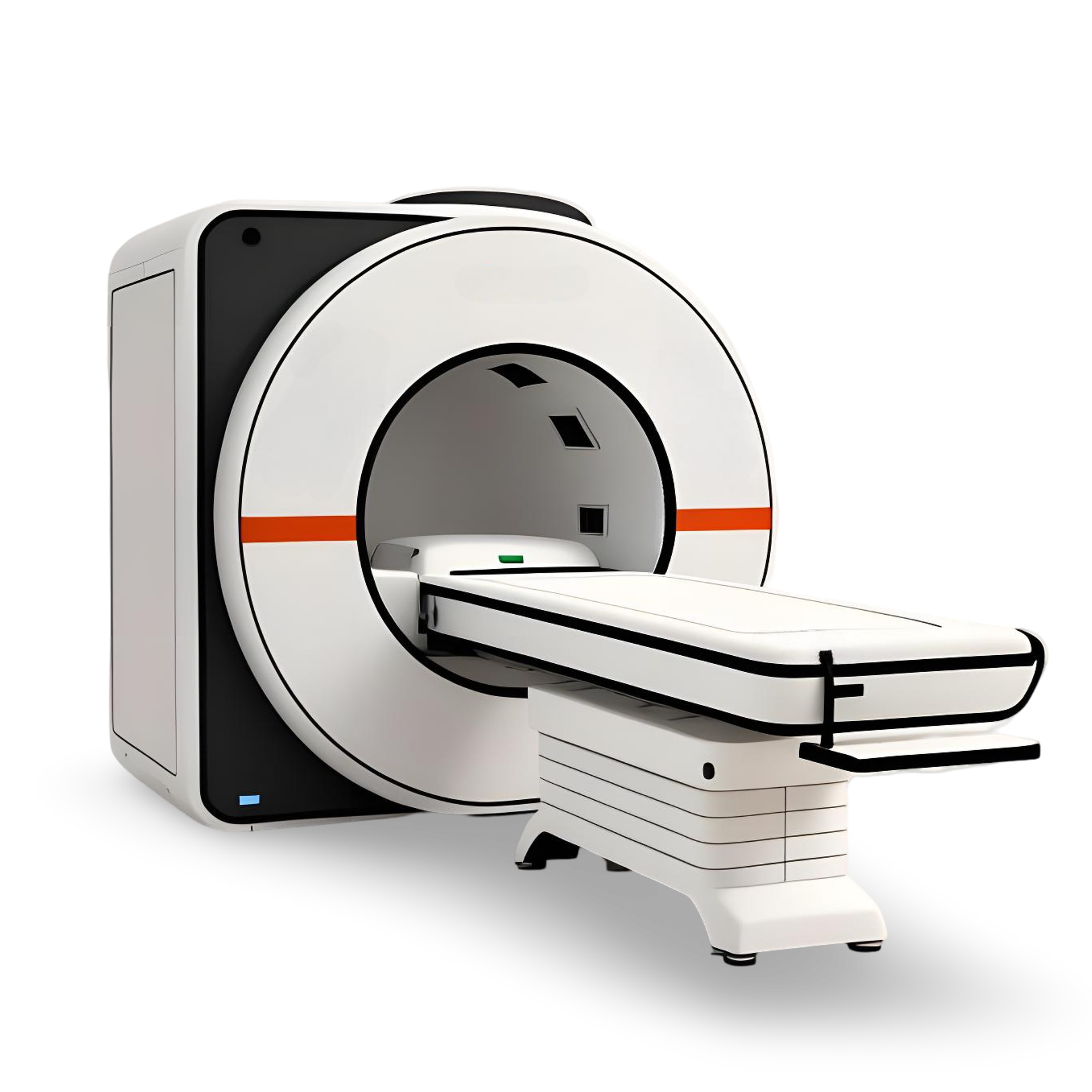
How Hospitals Will Use MRI in 2026 to Better Heal patients with Advanced Imaging
Doctors utilize MRI to visualize what’s going on inside your body. The use of MRI scanners has developed significantly, resulting in better, faster, clearer, and less stressful images for 2026. This helps doctors more quickly and easily diagnose an ailment and plan the optimal course of action for a patient. Doctors are finding, however, that an MRI scan is more of a tool.
The MRI scan does not employ radiation, as the X-ray or CT scan. Instead, it takes advantage of the way your body’s molecules react when subjected to strong magnets and radio waves. The fact that this is safer makes the MRI scan an attractive option for many people. Artificial Intelligence, cloud platforms, stronger magnets, and automation make the MRI scan even more valuable. MRI scanners are rapidly evolving.
What exactly is MRI technology?
MRI is a method of taking a picture of internal body parts (like organs, muscles, nerves and bones) non-invasively, which can help with diagnostics. The MRI scan technology is an invaluable asset. The procedure is straightforward: A patient enters a tunnel, in the center of which there is a magnet. The magnet forces your body molecules into alignment. Radio waves are used to perturb the alignment of the molecules, while computer processing helps produce clear and crisp images based on how the molecules react. The images are helpful to physicians.
Doctors can prescribe an MRI for a variety of conditions, including problems with the brain or central nervous system, damage to the spine, heart disease, muscles tears and damage, screening for and checking tumors, scans of the liver or kidney for ailments and blood vessel issues. All are examples of what doctors may prescribe an MRI for.
Top MRI Technologies in Use at Hospitals in 2026
1. AI-Powered MRI
Artificial Intelligence in an MRI scan takes on multiple forms. Faster scans, sharper images, automated anomaly detection, fewer human error and more helpful diagnoses are all benefits. There are many ways Artificial Intelligence can help with an MRI scan. For example, Artificial Intelligence may even pick up on mistakes that humans could potentially miss, providing patients with an accurate diagnosis more quickly.
With AI-MRI, there is faster report generation, better image reliability, reduced staff burden and increased patient care. AI-MRI scanners are effective.
2. High-Field MRI Scanners
High-Field MRI scanners, such as those with magnetic strengths of 3 or 7 Tesla, are employed at many hospitals today, yielding incredible images. The advantages of these scanners are that the images are very clear, the parts of the body you want to examine will look better than with an MRI scan that uses a weaker magnetic field and the system is superior for any type of exam. They are particularly useful for tumor examination. High-Field MRI scanners have their benefits.
3. Ultra-Fast MRI Technology
A few years ago, the scan alone would take quite a long time to produce and be read, but with new Ultra-Fast MRI technology, the exam is completed in 15 minutes or less. What this means is that patient comfort is increased, images are much less prone to motion artifacts and there is greater hospital efficiency. Ultra-Fast MRI technology delivers fast and efficient imaging.
4. Open MRI Systems
Claustrophobia or discomfort may cause patients to refuse the MRI scan. Open MRI machines, unlike their enclosed counterparts, are much less intimidating for those individuals. Open MRIs also benefit children, seniors, heavier patients, and those who fear being closed-in. Open MRI Systems can benefit a range of patients.
5. Functional MRI (fMRI)
Functional MRI measures brain activity by monitoring changes in blood flow to different parts of the brain. Functional MRIs are prescribed for brain surgery planning, stroke evaluations, neurological disorders and for scientific research. It's very useful.
6. MRI-Guided Procedures
Physicians can also use MRI machines to guide the course of a procedure that might involve injections of medication, cancer treatments, surgical interventions and focused ultrasound. It's quite useful.
7. Cloud-Based MRI Data Management
Storing MRI scans in the cloud has simplified sharing of the files. The benefits of this are ease of data access, a second opinion for physician and patient collaboration and faster turnaround times for diagnoses. Cloud-based data management is very useful.
8. 4D MRI Imaging
3D images are also more readily available than they were just a few years ago, with scans lasting for just under a minute. When combined with additional image acquisition, such as those used in fMRI scans, detailed analyses can be performed on patients with heart ailments, moving parts or for medical research. It's very useful.
9. MRI Spectroscopy
This procedure looks at the chemical composition of the tissues. Useful for diagnosis, tracking treatments, identifying and analyzing brain tumors or other disease progression. MRI Spectroscopy is helpful.
10. Silent MRI Technology
Patients also find it very bothersome when the MRI machine is running due to the loud sounds it emits. Doctors are finding that some MRI machines, using Silent MRI Technology, can significantly reduce those noise levels. The benefits of Silent MRI Technology include less anxiety for patients, it being less intrusive for children, the need for fewer sedations and just an improved patient experience. Silent MRI Technology is fantastic.
How AI is Improving the MRI Workflow.
Artificial Intelligence enhances the whole MRI process from start to finish. Before the scan begins, AI helps patients find an MRI appointment, positions them correctly and personalizes their scan parameters. During the exam, the system filters out motion artifacts, cleans up a blurry image and provides an extremely quick scan. The scans can then be interpreted faster by doctors due to help from Artificial Intelligence systems, which also highlight areas for further scrutiny.
MRI Benefits in 2026
Due to improvements made over the past few years, patients can achieve earlier disease detection, shorter scan times, better patient comfort, more precise treatment planning and a reduction in radiation exposure, to just name a few advantages. These and other advances continue to revolutionize MRI technology.
The Future of MRI Technology.
Future technological advancements to the MRI scan are anticipated. MRI scanners could begin appearing in portable settings or become even more localized. Future developments could see an increase in the magnetic strength of magnets and possibly quantum imaging technology. Personalized imaging and real-time disease prediction are also among the technologies being explored for the future. Remote MRI scans might even become more widely available.
The MRI has developed immensely over the last few years and with help from Artificial Intelligence, magnets, shorter scan times and cloud storage, this amazing medical equipment is more readily available to patients than it ever was before. It is definitely helpful.
FAQ
1. What does MRI stand for ?
The magnetic Resonance Imaging or MRI is a way for doctors to look inside your body. They use magnets and radio waves to get pictures of your organs and tissues with the MRI. This is really helpful for doctors to see what is going on inside you using the MRI.
2. Is MRI safe in 2026 ?
In 2026 the MRI is still an option for imaging. This is because the MRI does not use radiation, which is used in X-rays or CT scans. So people who need pictures of the inside of their body can choose the MRI.
3. How has AI improved MRI technology ?
Artificial Intelligence or AI has made MRI a lot better. It makes the pictures from the MRI sharper and more detailed. The AI also helps you stay still in the scanner for the session with the MRI. The MRI and AI work together to help doctors find problems. The AI can even do some tasks while doctors are using the MRI.
4. What is a 3 Tesla MRI scanner ?
The 3 Tesla MRI scanner is special because it uses a field. It is twice as strong as MRI scanners. This means that the pictures from the MRI are really clear. It is especially helpful when doctors need to see something with the MRI.
5. What is Functional MRI (fMRI) ?
The Functional MRI or fMRI shows which parts of the brain are working. It does this by tracking changes in blood flow using the MRI. The fMRI is really good for understanding how the brain works with the help of the MRI. It can even help plan surgery with the guidance of the MRI.
6. Are MRI scans still used in 2026 ?
Yes the MRI scans are still used now in 2026. New systems and quicker sequences make the MRI exam go faster. Many MRI sessions can finish in under 15 minutes using the MRI.
7. What is Silent MRI ?
The Silent MRI is a type of imaging that's not as loud as the MRI machines. This can help you feel less stressed during the scan with the MRI. It is a lot quieter, which is really nice.
8. Can MRI help detect cancer ?
Yes ,the MRI can really help detect cancer. The MRI is a tool that helps spot, assess and monitor cancer. It does this by visualizing tissues using the MRI signals. Doctors can look at those pictures to find areas that do not look right and then confirm what they are seeing with the MRI. The MRI is really helpful for finding cancer.